Why Reading Physical Books Still Matters | The Reading Room | Hockshi
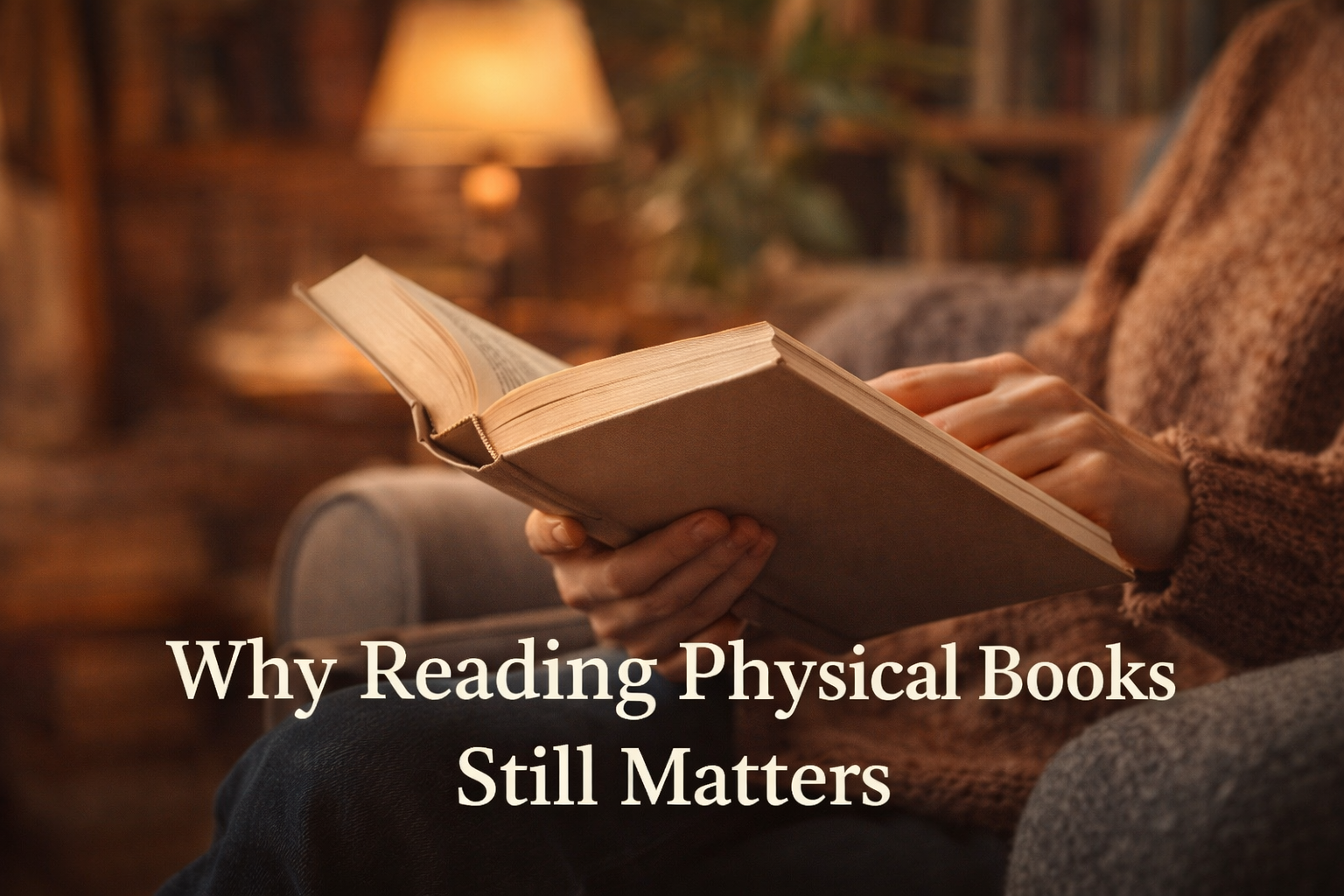
In a world of notifications, endless scrolling, and screens everywhere, choosing to read a physical book can feel like a small act of rebellion — and a powerful act of self-care. E-books and audiobooks have made reading more convenient than ever, but printed books continue to offer something deeper: focus, presence, and a tactile connection to knowledge that digital formats can’t fully replicate.
Physical books still matter because they shape how we think, how we remember, and how we experience stories. Below are the key reasons printed books remain essential — for readers, families, and communities.
If you’ve been meaning to get back into reading, starting with a physical book makes it easier to slow down and stay present.
1. Physical Books Help You Focus
Screens are designed to distract. Even when you’re reading on a tablet or phone, it’s easy to drift into notifications, messages, or quick “just one more” app checks. Physical books remove that temptation. You open a book, and the only thing it asks of you is attention.
2. You Remember More When You Read on Paper
Many readers report that they retain more from print than from screens. Part of that comes from the way our minds build “spatial memory” around physical pages — remembering what you read based on where it appeared in the book, how far you were, and what the layout looked like.
3. The Reading Experience Feels Deeper
A physical book is immersive. The texture of the pages, the weight in your hands, and even the quiet sound of turning pages create a rhythm that helps you sink into a story. Digital reading can be convenient, but print reading often feels more grounded and emotionally engaging.
4. Physical Books Are Easier to Share
Lending a book to a friend is a meaningful gesture. A physical book can carry notes, bookmarks, and personal history — turning reading into connection. Sharing an e-book or app library simply doesn’t feel the same.
Find share-worthy books →
5. Physical Books Support Better Reading Habits
When a book is visible on a table or shelf, it becomes a gentle reminder to read. A physical book invites you back. It’s easier to create a nightly routine when your next chapter is waiting in the same spot every evening.
6. Books Create a Home Culture of Learning
Homes with books feel different. Whether you’re raising kids, hosting friends, or building your own space, shelves of books signal curiosity and growth. A personal library isn’t just decoration — it’s a culture.
7. Physical Books Last — and They Don’t Disappear
Digital libraries can change: services shut down, licensing terms shift, devices break. Physical books don’t vanish because a platform changed. If you care about long-term access to knowledge, print books remain one of the most reliable formats ever created.
Build your library with used books →
8. Physical Books Carry History and Character
A used book often contains small traces of its journey — a note in the margin, a name on the inside cover, a pressed flower, a worn spine. These details remind us that books live real lives and pass through real hands. That’s part of what makes physical books feel timeless.
In the end, reading physical books still matters because it’s one of the few activities that combines focus, imagination, learning, and calm. It’s not about rejecting digital formats — it’s about preserving the depth that print reading gives us.
At Hockshi Used Books, we’re proud to keep physical books in circulation — so stories can continue to be held, shared, and reread for years.
If you’ve been feeling pulled in a hundred directions, a physical book is a simple way to slow down. One chapter at a time.
Browse our collection and find a book you’ll actually finish — and want to keep.
Find Your Next Physical Book